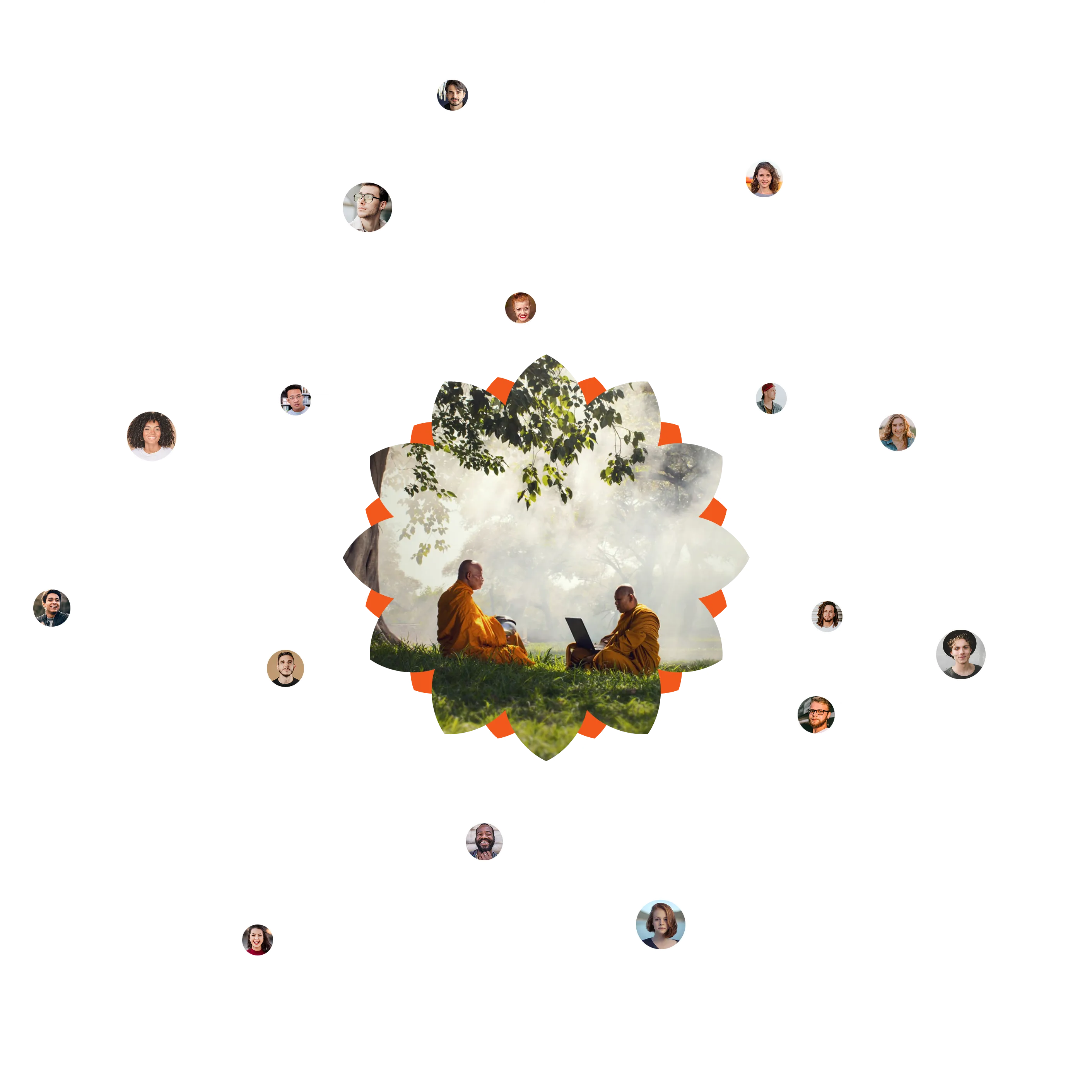
Hero illustration

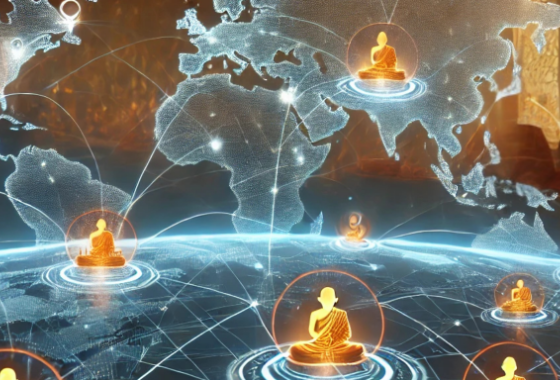
Connect with Buddhist Monks Worldwide

Real Conversations. Daily Teachings. Great Causes.
Timeless Guidances.
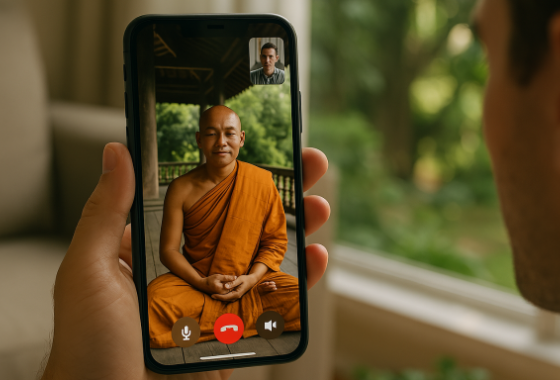
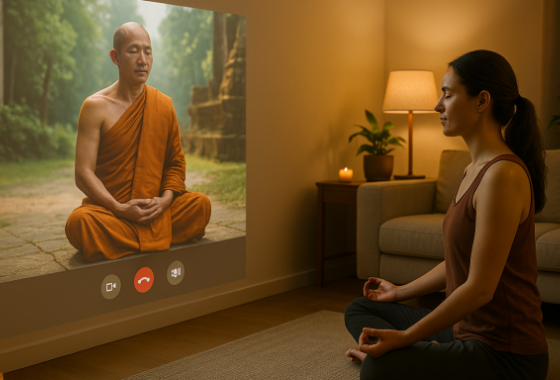
Make Video Calls with Monks

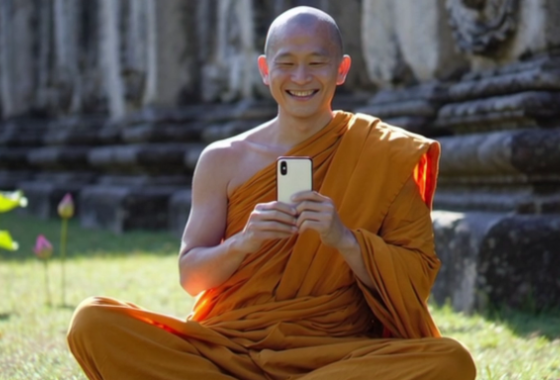
Connect with real Buddhist Monks for guidance, blessings, and inspiration through video calls.

View all Monks

Join a Global Buddhist Community

Be part of a supportive community rooted in mindfulness and compassion.

View Community Wall

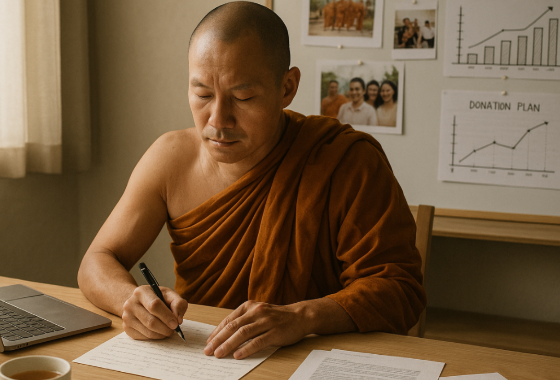
Fund Projects

Support projects that inspire compassion and create positive change.

View all Projects

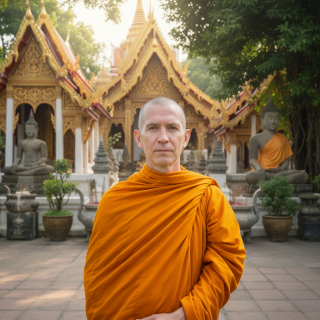
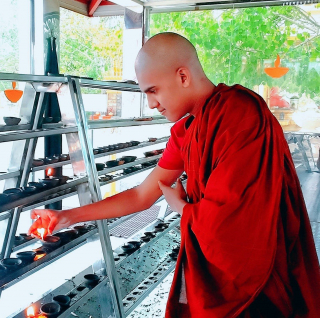
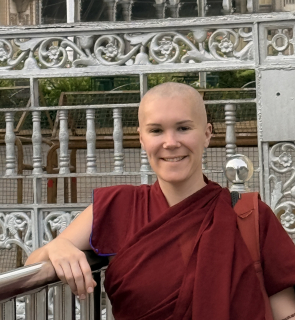
Meet the Monks

Discover wise and compassionate Monks from around the world and arrange a discussion with them online.

View all Monks

Daily Updates from Monks

A flow of wisdom, blessings, and stories from Monks and their communities.

Read our Community Wall
How to live correctly?🪷 In Buddhism, living according to the Dhamma means living in a way that reduces suffering for oneself and others through ethical conduct, a mindful and collected mind, and wisdom that understands life as it truly is. Ethical conduct guides us to speak and act with honesty, compassion, and responsibility without harming others; mindfulness trains the mind to stay clear, calm, and aware instead of being driven by anger, fear, or craving; and wisdom shows that all things are impermanent, unable to fully satisfy, and not owned by a fixed “self.” When these three—virtue, mindfulness, and wisdom—come together, a person lives with clarity, kindness, and purpose, using time meaningfully and facing change and even death not with fear, but with a peaceful understanding that it is a natural transition.
0
Death 🪷... In Buddhism, death is not considered the end, but a transition. When the body can no longer support life, consciousness does not vanish, but continues to another existence according to karma. This ongoing process is called Samsara. 🟢 Key points: Death is natural Everything that arises eventually passes away. This is called impermanence (anicca). Death is not to be feared blindly Buddhism teaches that fear comes from not understanding. Seeing death clearly brings wisdom and calm. The quality of the mind at the moment of death matters Actions, intentions, and mental habits influence the next rebirth. Death is not the final destination The cycle continues until one attains Nibbana (Nirvana), the end of rebirth and suffering. 🔹 So, in Buddhism, death = transition, not annihilation. Famous three characteristics: Impermanence (anicca) — everything changes Unsatisfactoriness (dukkha) — nothing can fully satisfy Not-self (anatta) — nothing belongs to a permanent “me” Understanding death in this way is not depressing — it brings clarity, compassion, and responsibility for how we live now.
7
In Buddhism, mindfulness can be understood in two ways: wholesome (good) mindfulness and unwholesome (bad) mindfulness. Unwholesome mindfulness is directly connected to greed, anger, and delusion. For example, a person may use mindfulness to concentrate intensely on harmful actions such as killing or shooting. In this case, mindfulness is present, but it is guided by unwholesome intentions. Wholesome mindfulness, on the other hand, depends on discipline and right understanding. It is rooted in non-greed, non-anger, and non-delusion. Through wholesome mindfulness, we can help others, reduce suffering, and bring peace into difficult situations. Often, a mindful presence and a non-attached smile are enough to ease the problems of others. Therefore, it is important not only to be mindful, but to be mindful in the right way.
5
Right Intention (Sammā Saṅkappa) A mindful shift from desire, ill will, and harm toward a life of wisdom and compassion. Renunciation (nekkhamma sankappa) – letting go of craving and attachment Good will (abyapada sankappa) – cultivating loving kindness and compassion Harmlessness (avihimsa sankappa) – choosing non violence in thought and action When the intention is pure, the path becomes clear. #rightintention #sammāsankappa #eightfoldpath #buddhism #buddhateachings #mindfulliving #renunciation #lovingkindness #compassion #nonviolence #innerpeace #dhamma
4
In Buddhism, downfall does not happen suddenly—it grows from repeated unwholesome habits. Excessive attachment to sleep weakens vigilance (pamāda). Foolish and careless speech clouds wisdom. Idleness and lack of effort destroy right striving (sammā vāyāma). Anger burns merit and blinds the mind. When these qualities dominate, one slowly moves away from the Noble Path and toward suffering. Mindfulness, effort, wise speech, and patience are the remedies that protect one from decline and lead toward liberation. Hashtags: #buddhism #buddhistwisdom #dhamma #mindfulness #right_effort #right_speech #anger #laziness #heedfulness #pathofpractice #mentaldiscipline #innerwork #spiritualgrowth #noblepath #selfawareness
5
Bhikkhu Upananda
10 days ago
Death is not sudden or strange. Just like the sun rises in the east and slowly sets in the west, our life also begins, moves forward, and gently flows toward death. Understanding this truth helps us live mindfully and wisely in the present moment. #impermanence #deathawareness #mindfulness #buddhistwisdom #lifereflection #anicca #presentmoment #wisdomoflife
4
Bhikkhu Upananda
12 days ago
The Buddha taught mindful wealth management for household life. Divide your earned wealth into four parts: one part for daily living, two parts for wise investment, and one part saved for future emergencies. Balance today, secure tomorrow, and live with wisdom.
4
Bhikkhu Upananda
14 days ago
Continuous effort in the Dhamma unfolds in three ways: Ārambha-dhātu — the courage to begin, Nikkhama-dhātu — the strength to leave the unwholesome, Parakkama-dhātu — the determination to persevere. This is the energy praised by the Buddha.
4
How to applying buddhas teaching for our life.. 🙏 *Applying the Buddha’s teachings to life means more than learning doctrine; it is the process of transforming knowledge into lived experience. Through moral discipline, mindfulness, concentration, and wisdom, the Dhamma reshapes one’s thoughts, speech, and actions. It offers a balanced approach to joy and sorrow, success and failure, and teaches individuals to respond to challenges with patience, clarity, and compassion. Rather than rejecting the world, the Dhamma enriches everyday life—bringing depth to relationships, stability to emotions, and purpose to one’s journey. When integrated into daily living, it becomes a path that leads not only to inner peace, but ultimately toward liberation.
5

Fund a Meaningful Project

Discover and fund projects led by Buddhist monks and communities. Your contribution brings compassion, wisdom, and meaningful change to the world.

View all Projects

How Does It Work?

A Step-by-Step Guide to How It Works on Find Your Blessing

Frequently Asked Questions

Guidance to Help You on Your Journey with Find Your Blessing
Find Your Guidance to Your Inner Peace
This site uses cookies
Our site handles statistical and analytical cookies in order to give the best user experience possible to our visitors. For more details, read our Cookie Policy.